News
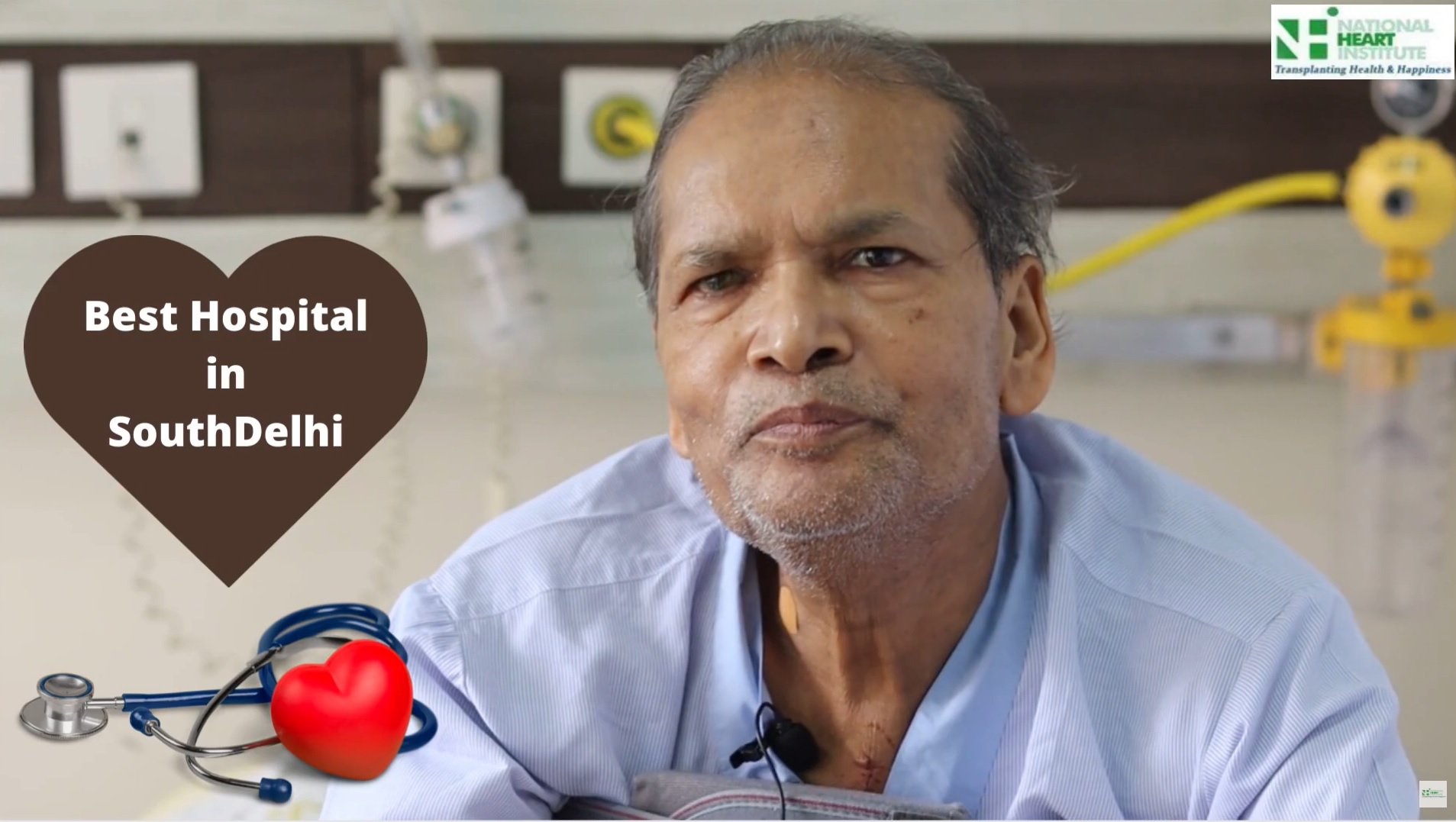
The National Heart Institute, New Delhi, is known for its long legacy. Over the past 42 years, Through quality treatment and service to society
Learn more
News
Regular Health Check-ups are one of the best ways to stay safe from diabetes. Attend our Free Diabetes Health Check-up Camp
Learn more
News
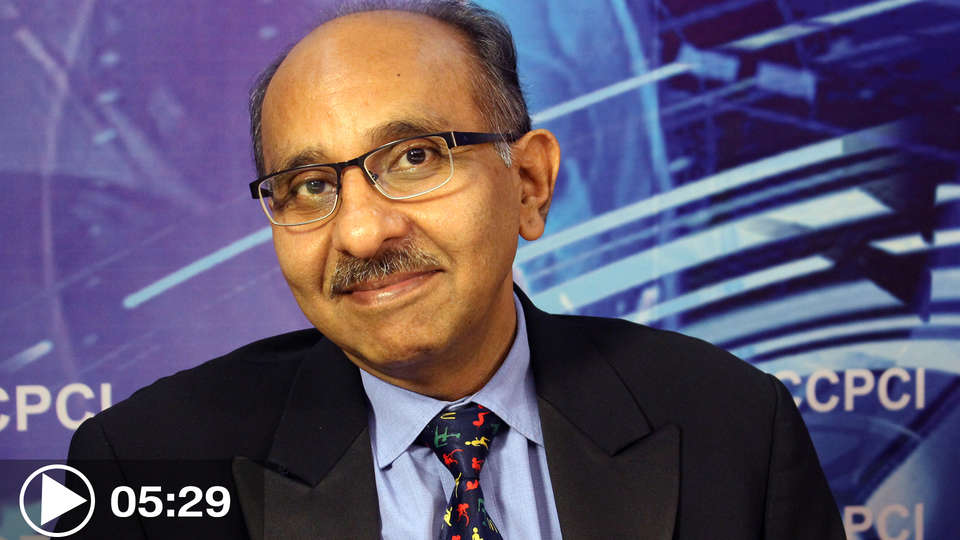
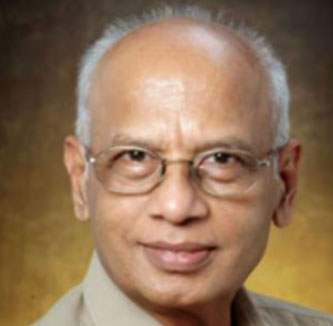
With a heavy heart and deep sorrow, we received thenews of passing away of Dr. Marthanda Varma SankaranValiathan, a luminary in the realm of cardiac sciences anda trailblazing colossus in the medical fraternity, after thecompletion of his ‘Earthly’ mission, on July 17, 2024, atthe venerable age of 90 years. The profound reactive sad-ness of his passing, however, soon yielded to a solemn cel-ebration… of a life of reason, well-lived with a purpose,and for a larger cause. An epiphany thus dawned—such a‘Becoming’ was in fact the very ‘Being’, destined to live forever and beyond, gaining immortality through his thoughts,deeds, and fragrance, that he leaves behind for the posterityto cherish. For the most of his 90 years, Dr. Valiathan madeunparalleled contributions to cardiac surgery, medical edu-cation, and healthcare innovation in India. A titan in the fieldof cardiac surgery, a maverick innovator, a pioneering forcein the medical community, and a rooted human being areall apt epithets, albeit none versatile enough to capture the‘spirit’ of this noble soul, christened MS Valiathan.
Born on May 24, 1934, in Mavelikkara, Kingdom of Tra-vancore of the British India, the prodigiously talented Dr.Valiathan’s journey into ‘Medicine’ began with the MBBSdegree from the University of Kerala. He further honed hisskills and expertise with surgical training at the Universityof Liverpool, gaining a fellowship from the Royal College ofSurgeons; and advanced tutelage in cardiac surgery at JohnsHopkins University in the USA. With a heart brimming andpulsating with passion and a mind bursting at the seams withideas, he returned home and chose to dedicate his life to theintricacies of cardiovascular and thoracic surgery.Dr. Valiathan’s career took a storied trajectory with theestablishment of Sree Chitra Tirunal Institute for Medi-cal Sciences and Technology (SCTIMST) in Thiruvanan-thapuram, reaching its zenith during his tenure as theFounder-Director. The genius, like a beacon, led biomedi-cal innovation and research at SCTIMST and contributedto the development of the low-cost, indigenous Chitra heartvalve, disposable blood bags, oxygenators, vascular grafts,and scores of other products. Beyond his surgical prowessand ingenious creativity, Dr. Valiathan’s legacy is equallydeeply defined by his commitment to medical education andalternative systems of ancient Indian medicine. He was acelebrated author of multiple titles in Ayurveda, includingthe ‘Legacy’ series on Susruta, Caraka, and Vagbhata. Asthe first Vice-Chancellor of Manipal University, he playeda pivotal role in establishing academic programs and insti-tutions like Manipal Academy of Higher Education. Headorned the chairs of ‘President, Indian National ScienceAcademy’ and ‘National Research Professor’ of the Govern-ment of India. His unquenchable thirst for knowledge
commitment to education and research earned him numer-ous accolades, including the hallowed ‘Padma Shri’ and‘Padma Vibhushan’ awards from the Government of India;‘Dr. Samuel P Asper International Award’ from the JohnsHopkins University Medical School; ‘Hunterian Professor-ship’ of the Royal College of Surgeons of England; ‘Dr. B.C.Roy National Award’; and the ‘Chevalier of the Order ofPalmes Académiques’ from the French Government, besidesinnumerable Orations and Guest Lectures.A paragon of humility, compassion, devotion, andunwavering dedication to patient care, never was he arro-gant, rude, or socially inappropriate. His virtuous qualitiesincluded a quiet, yet resounding and firm demeanour, amaster of all he surveyed. He lived a spartan life, yet giant-sized and full of scientific vigour, never shy to ask a ‘why’for every ‘a priori’ and presumption in scientific arena, andnot to spare himself an arduous task to solve its dilemmasand antimonies. He displayed the Schopenhauerian “will”,never once falling bait to its ‘ennui’, even till his last days.No wonder, all his students remember him as a friend-philosopher-mentor; his multitude of patients saw in hima healer; colleagues found a visionary in him; and to hisfamily—an altruist personified. Regardless of what vantagepoint one evaluated him, he stood tall and domineering andyet no theatrics, no rhetorics, and no polemics in his deal-ings—straight and clean was his countenance. No doubt, Dr.Valiathan’s remarkable journey was made ever so beautifulby his loving wife, and a full and blissful family of childrenand grandchildren.The entire fraternity of Indian Association of Thoracicand Cardiovascular Surgeons rise in unison to salute its‘GOAT’ (Greatest Of All Time), and just as we bid farewellto this extraordinary soul, we celebrate an ‘Activity’—a life,rich in purpose and content in achievement, but now in awell-deserved repose. May you rest in peace, our very ownDr. Valiathan Sir, you shall be missed.Till we meet again…!
Funding None. Declarations Conflict of Interest None. Publisher's Note Springer Nature remains neutral with regard tojurisdictional claims in published maps and institutional affiliations. Mor Info https://url-shortener.me/CCNV
- NHI
Learn more
News
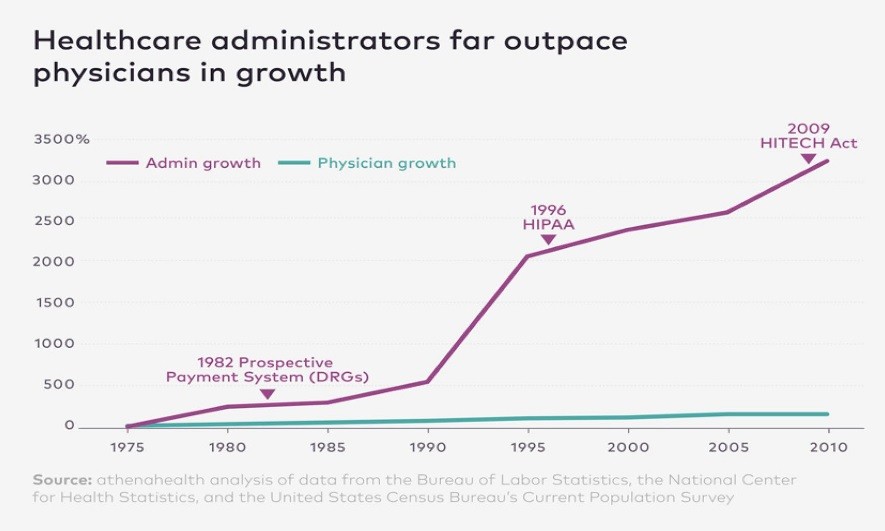
Pari passu with sibling rivalry between parallel and comple-mentary specialities, for example, cardiology and cardiacsurgery for wire-skills; there has been a turf war festeringbetween the ‘Scrubs’ (Clinicians) and ‘Suits’ (Administra-tors) [1]. This latter rivalry has assumed greater significancewith the corporate culture in medicine booming lately. ‘Thenumber of physicians in the United States grew 150 percentbetween 1975 and 2010, roughly in keeping with popula-tion growth, while the number of healthcare administratorsincreased 3,200 percent for the same time period ……astatistic derived by Physicians for a National Health Pro-gram using data from the Bureau of Labor Statistics, theNational Center for Health Statistics, and the United StatesCensus Bureau's Current Population Survey’ (Fig. 1) [2].Matters are unlikely to be any different in Indian privatehealth sector, especially in corporate hospitals.Proponents of the corporate governance structure justifythese burgeoning number of healthcare administrators by thefelt-need of complexities of governance—brought about bycut-throat competition, ever more complex regulatory com-pliance requirements, and medicine becoming more tech-nologically oriented. Even the legal, insurance, reimburse-ments, and finance-related issues call for special skill sets,not within the purview of an average clinician.
The opponents and critics, to the contrarian, cry foul thatthis army of administrators do precious little to reduce theclerical burden on clinicians; and it is them, the medicalprofessionals, who are at the receiving end when things goawry. Public reporting of outcome data and maintenanceof a lot of medical records for accreditation purposes addto the woes of the clinicians. Moreover, the terminologiesand the language used by these professional administratorsare straight from the commodity market and do not strike achord with the patient-centric, empathy-based, affective skillset and thinking of a practicing clinician, besides irritatingtheir not-so-subtle ego, thereby bringing disenchantment tothe practice of medicine. All this impairs doctor-patient anddoctor-doctor interpersonal relationships too, and is quiteoften seen as an open discord in some hospitals, and as asimmering dissatisfaction in others. As a corollary thereof,collateral damages emanating, like burn-out, depression,and psycho-social issues, too are not inconsequential. Asif all this was not enough, adding fuel to the fire, industry,and market force–driven evanescent novel technologies andephemeral therapeutics, of doubtful efficacy, add to the intri-cacies of governance and each warring faction claims felici-tousness in handling matters, with no convincing evidenceone way or the other.
Corporate hospitals’ governing hierarchy is based on themotto of profit-driven finance management, intervention-based human resource development, and business-generatingmarketing professionals with very little room for holistic,organically driven, and clinically oriented medical profes-sionals. They rely on complex, and at times convoluted,models of marketing and business development, which arebased on learnings from the schools of management, withvery little inputs from the bedside. This top-heavy mecha-nisation of the administrative side in the corporate hospitalsadds to the burgeoning cost of healthcare. In a recent studyfrom North America, prices in physician-owned hospitalswere about one-third less than non-physician owned corpo-rate hospitals across eight common services in a designatedarea [3]. Ultimately, all these extra costs are being paid bythe patients, who have to bear the ever increasing cost ofhealthcare, driving more and more people from poverty topenury. Additionally, even outcomes are better, ‘Ample evi-dence also suggests that physician-owned hospitals enhancephysician engagement, provide higher-quality care, and haveimproved patient satisfaction, lower costs, and better infec-tion rates compared with their competitors’ [4].
Therefore, there is an acute need for an open and society-based debate on this issue of serious import, to not only thepatients and doctors, but in fact to the entire society. Thesooner we develop the right balance, and the degree to whichthis corporate governance structure should evolve, would bebeneficial for the ‘health of the healthcare’. More Info https://shorturl.at/13AYo
- NHI
Learn more
News
I grew up during my residency days constantly being reminded of the sanctity of hard work and diligence required to make a cardiac surgeon. Often we were admonished by our teachers with adages like ‘we worked endless hours’, ‘slept on the floor of the intensive care unit (ICU)’ and ‘did 48–72 h duty continuously’. Do we really need to work to death to make a cardiac surgeon? In fact, Japanese call this death due to overwork ‘Karoshi’. No wonder then, there is a clamour across the world for a right mix of work and relaxation, and for exclusive moments just for self. Even the venerable Mohandas K. Gandhi once posited, ‘There is more to life than increasing its speed’. The sweetness of doing nothing is captured in Bengal in what they call ‘Lyadh’, it is ‘Dolce far niente’ for the Italians, ‘Lagom’ for Swedes, ‘Wu-wei’ for a Taoist, and ‘Hygge’ for the Danes and the Nordic communities. ‘If you want to be happy’, says the stoic ‘Laughing’ Greek philosopher, Democritus, ‘do little’ (Marcus Aurelius, Meditations, Book 4, Chapter 24, Penguin Books, 2006:28). ‘Work is worship’ may have been applicable during the ‘Great Depression’ and during the ‘Industrial Revolution’ to pull us out of the mess of the two world wars, but it has lost relevance in contemporary times; yet the ethos flourishes unabated worldwide. Nowhere is it better exemplified than in Japan where 9000 companies breached overtime laws last year with employees working more than 80 h of overtime a month. ‘Inemuri’ (Japanese) — meaning sleeping on the work desk, due to overwork — has become a norm. This has led to a clamour for cutting down working hours and Nordic countries have taken a lead in this experiment. In a trial of 6-h work-days for nurses, instead of the conventional 8 h, in Sweden’s Gothenburg district, nurses working shorter hours had better perceived satisfaction with personal health and better physiological health data and logged less sickness absence, albeit with a flip side
— higher costs and doubtful economic sustainability [1]. It is quite intuitive, as also borne out of the above study, that reduction of work hours alone does not translate into good health, unless complemented by other health enhancing life-style interventions. The epidemic of overwork is especially rampant in surgical specialities. ‘Surgeons are at great risk for developing burnout symptoms because of long work hours, delayed career gratification, and what is admittedly not the best work-life balance’, quipped Thomas K. Varghese Jr., head of General Thoracic Surgery, at University of Utah in Salt Lake City [2]. An additional factor making matters worse in Cardiothoracic and Vascular Surgery (CTVS) is the cutthroat competition in the speciality and most of us making a beeline for that numero-uno status in the number games, thereby inculcating type ‘A’ personality traits by default. No wonder 38.5% of thoracic surgery residents reported experiencing burnout, 44.4% feeling depressed, and 25.9% vouching not to take to the speciality, given a chance [3]. This phenomenon of overwork and burnout is contributing to loss of personal health of physicians and to strained inter-personal and family relationships. A testament to the extent and acuteness of the problem is that the 56th Annual Society of Thoracic Surgery (STS) meet felt obliged to arrange a special educational session on burnout! The blurring of boundaries between ‘work’ and ‘family’ and the ill-bodings of the consequent burnout in medical professionals do not stay confined to them, but also adversely reflect in their care of the patients. In a major survey of 7905 members of the American College of Surgeons, 700 (8.9%) self-reported a major medical error in the previous 3 months [4]. Over 70% attributed the error to individual rather than systemic factors, with an adverse relationship with depression and burnout in all its 3 domains — emotional exhaustion, depersonalization, and personal accomplishment. ‘Each one point increase in depersonalization (scale range, 0–33) was associated with an 11% increase in the likelihood of reporting an error while each one point increase in emotional exhaustion (scale range, 0–54) was associated with a 5% increase. Burnout and depression remained independent predictors of reporting a recent major medical error on multivariate analysis…..’ [4]. All this ultimately boomerangs into strained doctor-patient relationship and erodes the much needed trust between the two.
Shouldn’t a doctor have a right to relax and enjoy, to spend time with his family and be a part of the society in all its endeavours, besides being a professional? This is an issue which needs serious deliberation and deep speculation. We should refrain from extolling the virtues of sweating blood and be nuanced in our demands of diligence and perfection from our trainees. Some degree of failings and weaknesses should be accepted and it’s time that we learn and teach our students to have that right work-pleasure mix and not become the proverbial ‘workaholics’. Even the fundamental conundrums of ‘own good’ versus ‘societal good’ and the concept of ‘altruism’ in medical profession need to be revisited. ‘Nature leads every organism to prefer its own good to any other good’, an Epicurean thought of antiquity is as relevant today as it was when first propounded by the Greek Philosopher-sage Epicurus (341–270 BC). Blind industriousness, to the peril of personal health, sanity, and well-being, should not be construed a moral attribute, as it would lead to creating not humane and competent doctors, but ‘zombies’ — archetypical robotic physicians. Some may contend that artificial intelligence and robots in any case are going to be the future of ‘Medicine’, whether we like it or not. I shall refrain from picking cudgels with them, as long as it does not happen in my lifetime. I truly dread that day! ‘I fear the day that technology will surpass our human interaction. The world will have a generation of idiots.’ Albert Einstein
Funding None. DeclarationsInformed consent Not required.Conflict of interest The author declares no competing interests.References1. Lorentzon B, Yang F. Longitudinal, experimental evaluation ofreduced weekly working hours for assistant nurses. ResearchGate, March 2021. https:// www. resea rchga te. net/ publi cation/34994 7796_ Longi tudin al_ exper iment al_ evalu ation_ of_ reduced_weekly_working_hours_for_assis tant_nurses. Accessed 19Jan 2024.2. The society of thoracic surgeons. Burnout in CT surgery threatensjob satisfaction, patient care. https://www.sts.org/publications/sts-news/burnout-ct-surgery-threatens-job-satisfaction-patient-care.Accessed 17 Jan 2024.3. Chow OS, Sudarshan M, Maxfield MW, Seese LM, WatkinsAA, Fleishman A, et al. National Survey of Burnout and Dis-tress Among Cardiothoracic Surgery Trainees. Ann Thorac Surg.2021;111:2066–71. https://doi.org/10.1016/j.athoracsur.2020.06.062.4. Shanafelt TD, Balch CM, Bechamps G, Russell T, Dyrbye L,Satele D, et al. Burnout and medical errors among American sur-geons. Ann Surg. 2010;251:995–1000. https://doi.org/10.1097/SLA.0b013e3181bfdab3.Publisher's Note Springer Nature remains neutral with regard tojurisdictional claims in published maps and institutional affiliations.
- NHI
Learn more
News
What started as a kerfuffle, a kind of whispering mutter, in the back rows of conferences has now grown into a loud chorus. Wire-skills for cardiac su... More Info https://shorturl.at/G32CR
Learn more
News
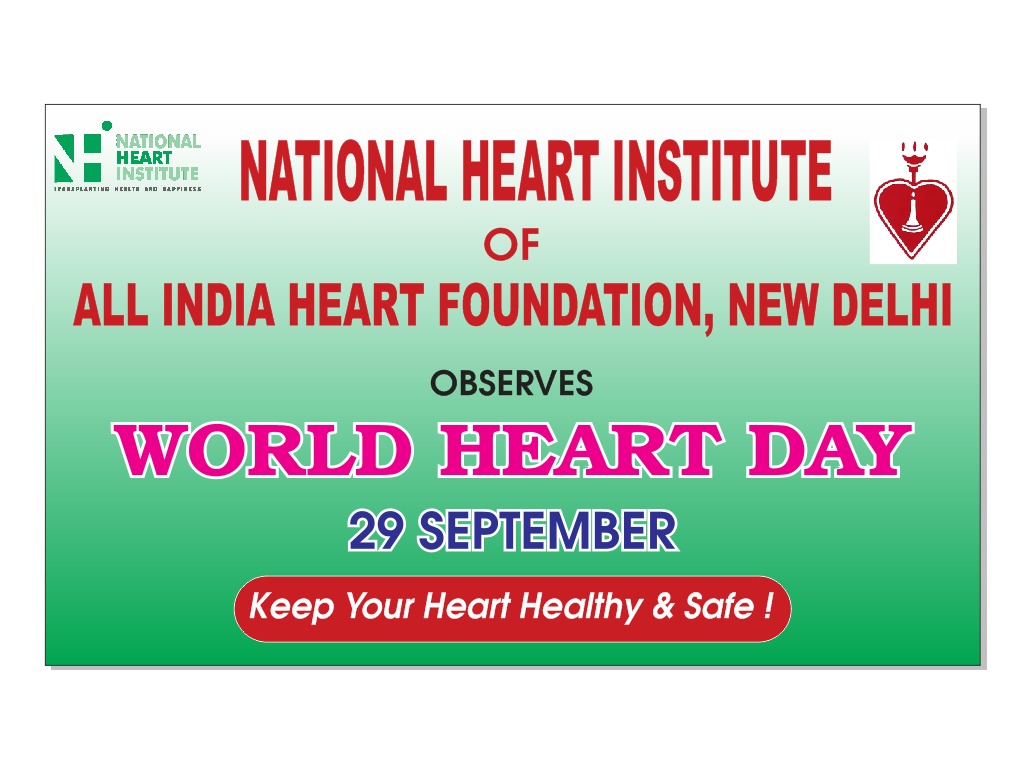
National Heart Institute, New Delhi of All India Heart Foundation Observed “World Heart Day” on 29 September 2023 in various parts of India including... More Info https://shorturl.at/L1eZX
Learn more
News
When I was a budding doctor, I was told, and in fact even perceived first hand, that ‘Medicine’ was on a pedestal of ‘Godliness’. In my middle years o... More Info https://url-shortener.me/CC5T
Learn more
News
नेशनल हार्ट इंस्टिट्यूट, नई दिल्ली अपनी लंबी विरासत के लिए जाना जाता है। पिछले 42 सालों में गुणवत्तापूर्ण इलाज़ व समाज के प्रति सेवा भाव से हर तबके के लोगों तक अपनी पहुँच बनाने में सफल रहा है। प्रसिद्ध अमेरिकी डॉक्टर पॉल डी वाइट एवं पद्म विभूषण स्व0 एस. पद्मावती द्वारा 1962 में ऑल इण्डिया हार्ट की शुरूआत की थी। हृदय रोगों के क्षेत्र में ऑल इण्डिया हार्ट फाण्डेशन की शाखा के रूप में एन एच आई को डॉ पद्मावती द्वारा 1981 में स्थापित किया था। आज बी.सी.रॉय नेशनल व राष्ट्रपति द्वारा पुरस्कृत लाइफटाइम अचीवमेंट अवार्ड से नवाजे गए डॉ.ओ.पी. यादवा सी.ई.ओ एवं प्रमुख कार्डियक शल्य चिकित्सा व डॉ. विनोद शर्मा प्रमुख कार्डियोलॉजी विभाग के देखरेख में संस्थान उसी लगन से आम जन-मानस को अपनी सेवायें दे रहा है। आयुष मंत्रालय से मान्यताप्राप्त यह संस्थान देश में सैन्य सेवाओं सहित केंद्र व राज्य सरकारों के विभिन्न मंत्रालयों के कार्मिकों सहित देश के 250 से अधिक संस्थानों के कार्मिकों व कई राज्य सरकारों को हृदय रोग सहित अन्य क्षेत्रों में उत्कृष्ट सेवाएं दे रहा है। अधिक जानकारी के लिए क्लिक करें More Info https://youtu.be/wxrAcFCMvAI
Learn more
News
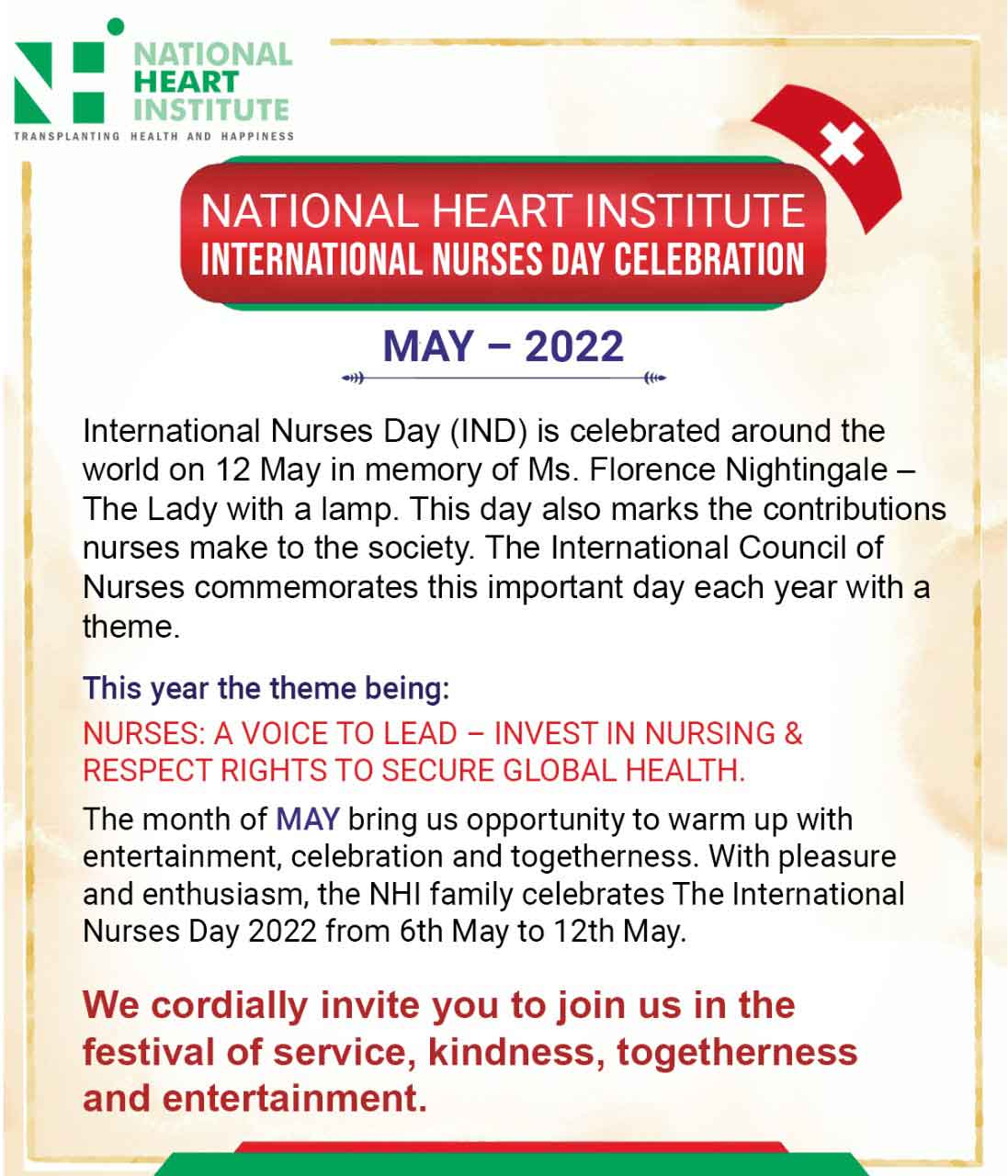
International Nurses Day (IND) is celebrated around the world on 12 May in memory of Ms. Florence Nightingale – The Lady with a lamp. This day also marks the contributions nurses make to the society. The International Council of Nurses commemorates this important day each year with a theme.
This year the theme being: NURSES: A VOICE TO LEAD – INVEST IN NURSING & RESPECT RIGHTS TO SECURE GLOBAL HEALTH. The month of MAY bring us opportunity to warm up with entertainment, celebration and togetherness. With pleasure and enthusiasm, the NHI family celebrates The International Nurses Day 2022 from 6th May to 12th May.
We cordially invite you to join us in the festival of service, kindness, togetherness and entertainment.
Learn more